
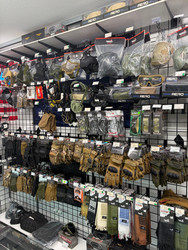
Airsoft Protective Gear Guide: Goggles, Masks, Helmets & More
Posted by Joseph Miles on Jul 28th 2026
Let’s get one thing out of the way: getting hit by an airsoft BB usually isn’t a big deal.
It might sting. It might leave a small welt. It might also give your friends a reason to laugh when you dramatically announce that you’ve been “shot” in the backside.
But there are a few places where nobody wants to take a BB—especially the eyes, teeth, ears, fingers, and other sensitive areas. That is why protective gear should never be treated as an afterthought.
A good airsoft loadout is not just about looking tactical. It should help you play confidently, move comfortably, and finish the day with the same number of teeth you had when you arrived.
Here is how to choose the right airsoft protective gear without dressing like you are preparing to defuse a bomb.
Start With the Most Important Item: Eye Protection
Your airsoft rifle can be upgraded later. Your vest can wait. You can even survive your first game without seventeen magazine pouches and a tactical snack compartment.
Proper eye protection, however, is nonnegotiable.
Airsoft BBs travel quickly, and your eyes are extremely vulnerable to impact. Ordinary sunglasses, fashion glasses, shop glasses of unknown quality, and bargain-bin goggles are not suitable substitutes for properly rated protection.
Look for airsoft goggles or eyewear from a reputable manufacturer with a clearly identified impact rating. ASTM maintains a standard specifically for eye-protective devices used in airsoft sports, known as ASTM F2879. ANSI also publishes impact-performance standards for occupational eye and face protection.
When choosing eye protection, consider:
- Impact rating: Verify the manufacturer’s stated safety rating rather than assuming thick-looking lenses are safe.
- Full-seal coverage: The goggles should seal around the eyes without openings that could allow a BB to enter from the side.
- Secure retention: A strap helps keep the goggles in place while running, crawling, or performing your most ambitious action-movie slide.
- Clear visibility: Scratched, distorted, or extremely dark lenses can make it harder to see hazards and other players.
- Comfort: Pressure points become miserable after several hours of play.
Never rely on mesh goggles as your only form of eye protection. A BB can break or fragment on impact, allowing small pieces to pass through the mesh.
Your goggles should also stay on whenever you are in an active play area. Fogging is frustrating, but removing your goggles on the field is never the solution. Move to a designated safe area and address the problem there.
How to Reduce Goggle Fog
Fog is the natural enemy of airsoft players.
You can own an impressive replica, wear a perfectly coordinated uniform, and have enough magazines to supply a small squad—but none of that helps when your goggles turn into a bathroom mirror after a hot shower.
To reduce fogging, look for goggles with good ventilation, anti-fog lens treatments, dual-pane lenses, or compatible fan systems. An anti-fog cloth or solution may also help when used according to the manufacturer’s directions.
Your face covering and helmet can affect airflow too. If your lower-face mask directs warm breath straight into your goggles, fogging may become worse. Adjusting the mask or choosing a more breathable design can make a major difference.
The best goggles are not necessarily the most expensive pair. They are the properly rated pair that fits your face, stays secure, provides a clear field of view, and works with the rest of your equipment.
Protect Your Teeth With a Lower-Face Mask
A hit to the cheek may leave a temporary mark. A direct hit to an unprotected tooth may result in a much more expensive souvenir.
Lower-face protection covers the mouth, teeth, cheeks, and sometimes the ears. It is especially valuable for younger players, beginners, aggressive players, and anyone playing in close-quarters environments where engagements happen at shorter distances.
Common options include:
Mesh Lower-Face Masks
Mesh masks are popular because they provide solid protection while allowing airflow. Many models can be shaped slightly for a better fit and worn underneath compatible goggles.
The challenge is finding a combination that does not create a gap between the goggles and mask. Check the fit carefully from the front and both sides.
Padded Masks With Mesh Centers
These combine a rigid or mesh center over the mouth with softer fabric along the cheeks. They can be more comfortable when aiming down sights because the flexible sides interfere less with the rifle stock.
Full-Face Masks
Full-face masks combine eye and face coverage into one unit. They are often an excellent choice for beginners because there are fewer gaps to worry about and fewer separate pieces to adjust.
Some players avoid full-face masks because they think they do not look “tactical” enough. We would argue that having all your teeth is a pretty tactical feature.
Whatever style you choose, make sure it does not interfere with your goggles, breathing, communication, or ability to shoulder your airsoft rifle safely.
Helmets: Protection, Comfort, and Somewhere to Mount Your Stuff
Do you absolutely need a helmet to play airsoft?
Not always.
Is one useful? Absolutely.
A helmet can help protect your head from BB impacts, low branches, doorframes, barricades, and those mysterious objects that seem to appear exactly where your head is moving.
Airsoft helmets are available in several styles, ranging from lightweight bump-style helmets to replicas inspired by military designs. Before buying one, think about how you actually play.
Look for:
- An adjustable suspension or padding system
- A secure chin strap
- Adequate ventilation
- Enough room to work with your goggles
- Side rails or mounting points when needed
- A weight you can comfortably wear for several hours
A helmet that constantly slides over your goggles is not helping. Neither is one that gives you a headache before the first game ends.
Helmets are also useful for mounting cameras, lights, identification markers, ear protection, or communications equipment. Just remember that every accessory adds weight. It is easy to turn a lightweight helmet into a tactical chandelier.
Players who do not want a helmet can still use a padded cap, beanie, boonie hat, or other head covering for basic protection and comfort.
Do Not Forget Your Ears
Ear hits have a special talent for getting your immediate attention.
Some lower-face masks include built-in ear protection. Helmet-mounted ear covers and communications headsets can also provide coverage, depending on their design.
Players with exposed ears should consider adding protection, particularly when playing indoors or in close-quarters areas.
Make sure any ear protection still allows you to hear calls, whistles, referees, and nearby players. Protective gear should improve safety without cutting you off from what is happening around you.
Gloves: Because Finger Hits Hurt More Than They Should
Ask experienced airsoft players where they least enjoy getting hit, and fingers will usually rank near the top.
Hands are often exposed while holding a rifle, leaning around cover, reloading, or signaling teammates. There is not much natural padding over the knuckles, which explains why a finger hit can make a grown adult suddenly develop a very creative vocabulary.
Airsoft gloves should offer a balance of protection and dexterity.
Look for:
- Reinforced knuckles
- Padding over the fingers
- A secure wrist closure
- Breathable materials
- Enough grip to control your equipment
- A fit that still allows you to reload and operate controls
Avoid gloves that are too bulky. Heavy gloves may provide more padding, but they can make it difficult to use your trigger safely, adjust equipment, or handle small items.
Try moving your fingers, gripping your rifle, accessing your magazines, and operating your safety selector while wearing the gloves. Protective gear should work with you rather than making every task feel like you are wearing oven mitts.
Body Protection: How Much Do You Really Need?
Body protection is largely a matter of comfort, playing style, environment, and personal preference.
Some players wear a simple long-sleeve shirt. Others wear tactical uniforms, plate carriers, padded shirts, neck protectors, elbow pads, and knee pads. Neither approach is automatically right for everyone.
Long Sleeves and Durable Pants
For many players, a long-sleeve shirt and sturdy pants provide enough basic coverage. They help reduce scrapes from vegetation, barricades, and crawling while taking some of the sting out of BB impacts.
Choose clothing that allows you to move freely and is appropriate for the weather. Wearing thick clothing on a hot Arkansas afternoon may protect you from a welt while introducing you to an entirely different problem.
Chest Rigs and Plate Carriers
Chest rigs and plate carriers can carry magazines, radios, hydration, and other equipment while adding another layer between you and incoming BBs.
A chest rig is generally lighter and more breathable. A plate carrier provides more coverage and mounting space but may trap more heat.
Choose based on what you actually need to carry. You probably do not need enough pouches for a three-day operation when you are playing a twenty-minute game.
Neck and Groin Protection
These areas are easy to overlook until the exact moment you wish you had not overlooked them.
A shemagh, neck gaiter, high collar, or dedicated neck protector can soften hits around the neck. Players can also wear purpose-built protective cups or padded garments for lower-body protection.
It may not be the most exciting gear purchase, but neither is explaining why you are walking strangely after the game.
Knee and Elbow Pads
Knee pads are extremely useful for players who kneel behind cover, crawl, or play on rocky and uneven ground. Elbow pads can also prevent scrapes and bruises when moving through buildings or dropping into position.
Look for pads that remain secure without restricting circulation or sliding down every five minutes.
Make Sure All Your Gear Works Together
Buying each piece separately without checking compatibility can create problems.
Your helmet may push your goggles downward. Your goggles may leave a gap above your face mask. Your face mask may prevent you from getting a proper cheek position on your rifle. Your plate carrier straps may interfere with your helmet or communications equipment.
Before game day, put on your complete protective setup and test it.
Move your head from side to side. Shoulder your rifle. Aim down the sights. Kneel. Reload. Look over both shoulders. Talk. Breathe. Jog around a little.
Yes, you may look strange doing this in your living room. That is still better than discovering a problem five minutes before the first game.
Protective Gear for Younger and First-Time Players
New players usually benefit from more coverage rather than less.
A full-face mask, gloves, long sleeves, durable pants, and comfortable head protection can help a beginner feel less nervous about being hit. When players feel protected, they are more likely to move, communicate, and participate instead of spending the entire game hiding behind the first barricade they find.
Parents should check the rules of the airsoft field before purchasing equipment. Field requirements may differ, particularly for minors. Some facilities require full-face protection for younger players even when adults are permitted to use separate goggles and lower-face masks.
Always choose equipment that fits the player now. Oversized gear that shifts, falls off, or creates gaps is not safer just because the player may eventually grow into it.
Our Simple Airsoft Protection Checklist
Before heading to the field, check that you have:
- Properly rated, full-seal eye protection
- A secure strap and lenses in good condition
- Lower-face and tooth protection
- Head and ear protection when needed
- Gloves with adequate finger and knuckle coverage
- Clothing appropriate for the terrain and weather
- Knee or elbow pads when your playing style calls for them
- A complete setup with no dangerous gaps or compatibility problems
Inspect your equipment regularly. Replace lenses, straps, buckles, padding, or protective components that are cracked, deeply scratched, damaged, or worn out. Follow the manufacturer’s care and replacement instructions.
Choose Gear You Will Actually Wear
Protective equipment only works when it fits correctly and stays on.
The right setup does not need to be the heaviest, most expensive, or most complicated loadout available. It needs to protect the vulnerable areas, meet your field’s requirements, and remain comfortable enough to wear throughout the day.
At Survival Mode Tactical, we carry airsoft goggles, face masks, helmets, gloves, and other protective equipment for beginners and experienced players. We can help you compare options and put together a setup that works as a complete system—not just a random collection of gear that looked good online.
Explore our protective gear at TheSurvivalMode.com, or visit Survival Mode Tactical in Siloam Springs, Arkansas, to get help choosing equipment for your playing style.
Protect your eyes. Protect your teeth. Protect your knuckles.
Then get out there and have fun.